The frame rots out of sight
Joists in contact with soil, or with no airflow beneath, rot from below while the boards still look fine. The repair is a rebuild, not a re-board.
Every service
Free site visit, written quote within 48 hours and up to 5 years' guarantee on new installations.
All fencing servicesBerkshire &: Surrey
Based in Bracknell, working across Berkshire and Surrey every day.
All areas we coverDecking · Bracknell, Berkshire & Surrey
A level, solid, non-bouncing deck that drains properly and still feels firm in year five, because the frame under it is specified for your ground, not for a quick finish. Free site visit and a written quote within 48 hours.
20+ years' experience · Up to 5 years' guarantee · £5m public liability insured
Fencing experience
Public liability insured
Guarantee on new installs
Quote after your site visit
Checkatrade member
Service overview
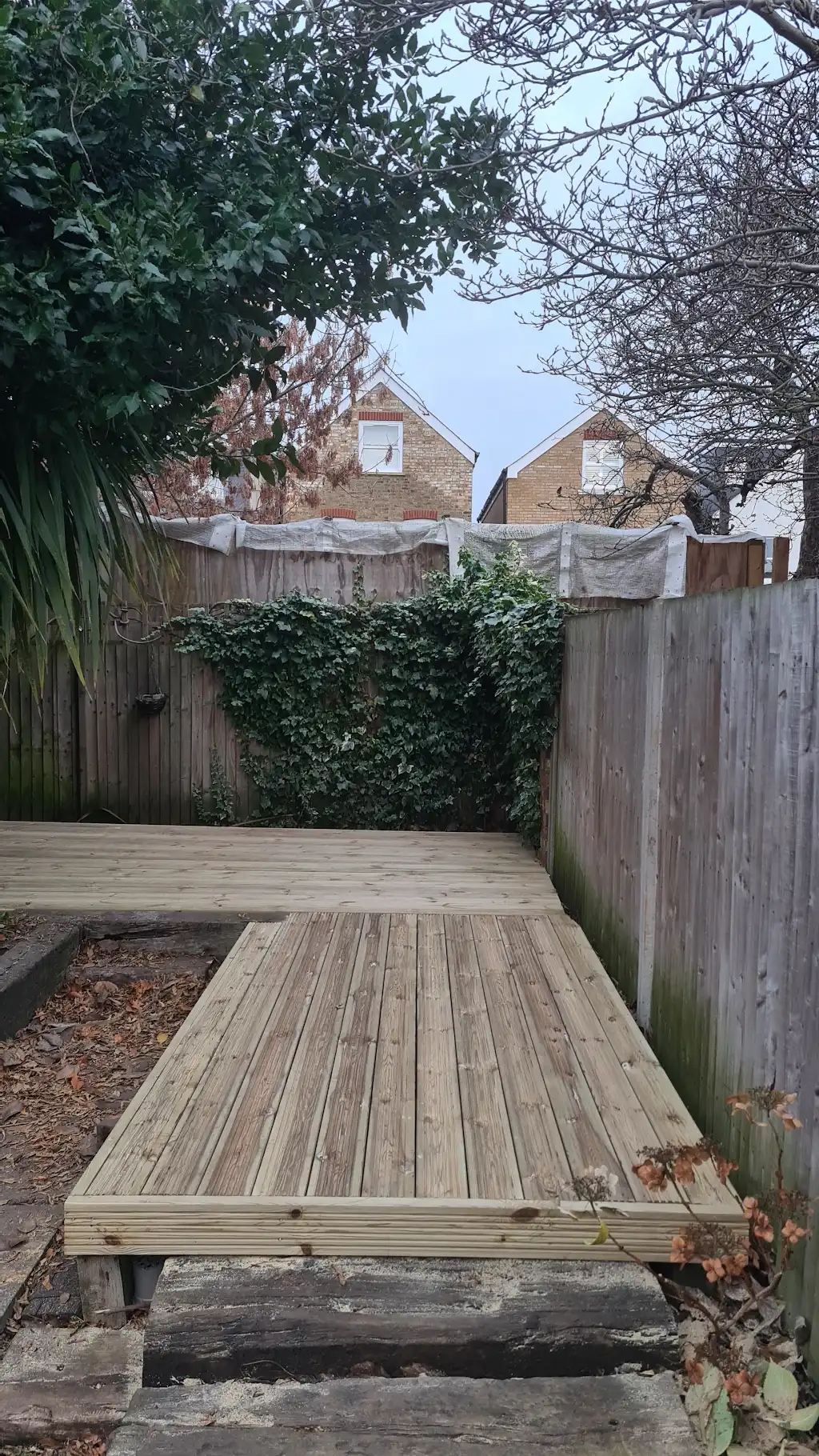
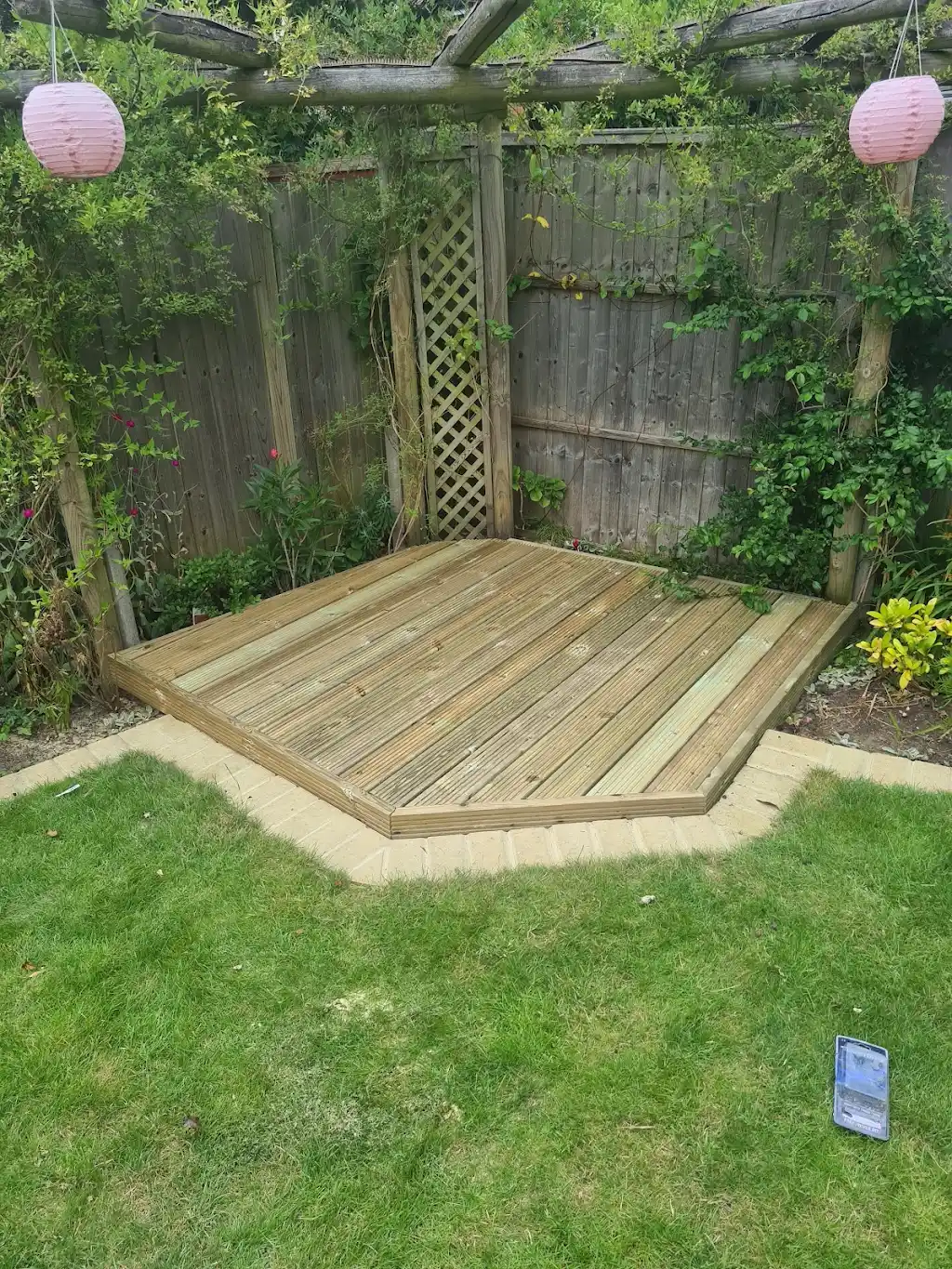
Decking is a raised timber or composite platform on a supported joist frame. The boards are what you see and the least of the work: the deck's life is decided by bearer and joist spacing, how the frame is supported off the ground, whether air can move under it, and how water leaves the structure.
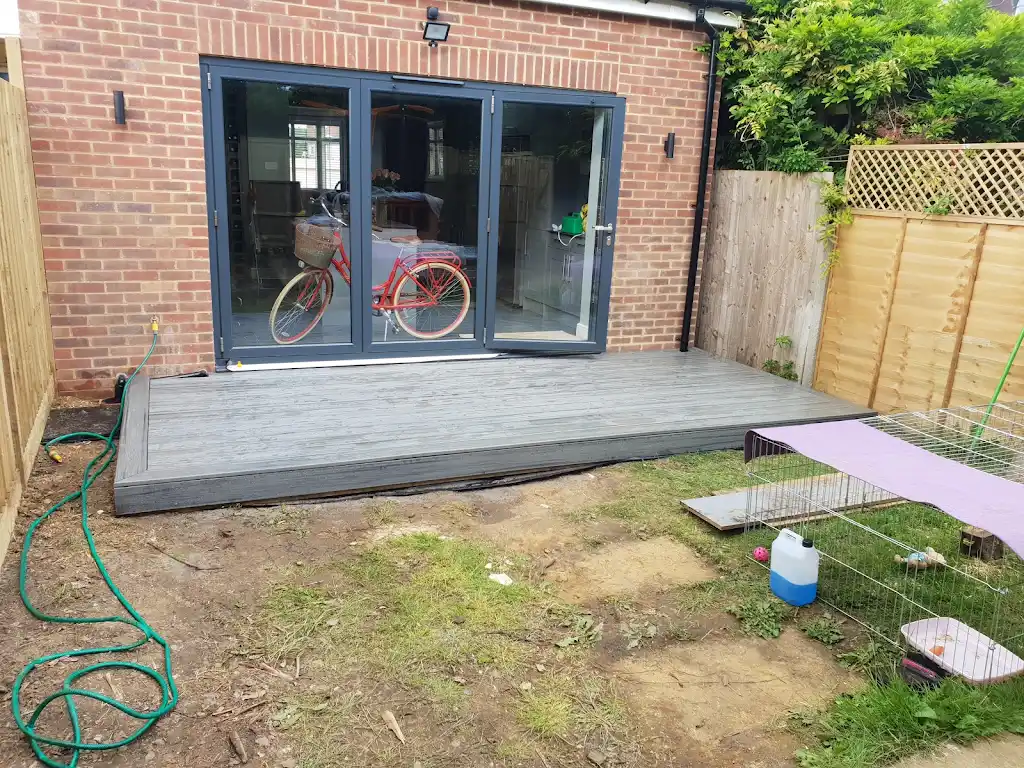
We build timber decks in pressure-treated softwood and composite decks in wood-polymer boards, set out with the correct joist centres for the board being used, composite generally needs closer centres than timber, and getting that wrong is what produces a springy, sagging deck.
Decks fail for structural reasons, not decorative ones. Joists at too-wide centres flex: a frame sitting directly on soil rots from underneath: no ventilation gap traps damp: boards laid without drainage gaps hold water and grow algae; and a deck fixed to a wall without thought about the damp-proof course causes problems inside the house rather than outside it.
We build the frame first and properly, then board it, and we hold £5,000,000 public liability insurance and employers' liability cover for the work.
What it costs to wait
A deck hides its own faults. By the time the surface tells you something is wrong, the frame has usually been wet for years.
Joists in contact with soil, or with no airflow beneath, rot from below while the boards still look fine. The repair is a rebuild, not a re-board.
Flexing boards and a moving frame put load on fixings and handrails. That is a trip and fall risk exactly where people sit and children run.
A deck built hard against a wall with no drainage path pushes water at the brickwork and, at worst, above the damp-proof course.
Boards with no drainage gap and no airflow stay wet, grow algae and turn a garden feature into something you avoid for half the year.
Our process
We look at the levels across the whole area, the fall away from the house, what the frame can bear onto, access for materials and spoil, and where the deck should stop so it does not fight the boundary or a drain.
You get the frame specification, board type, area, any steps or balustrade and the expected duration in writing, normally within 48 hours. Timber and composite can be priced side by side so you can compare properly.
The area is cleared, the ground prepared, and the bearers and joists set out at the correct centres for the boards being used, supported off the ground with airflow beneath and a deliberate fall for drainage.
Boards are laid with correct drainage and expansion gaps, fixed with galvanised or system fixings, and edges, steps, fascias and any balustrade are finished so there are no exposed cut ends or trip edges.
We load-check the deck, walk the whole surface for movement and proud fixings, sweep it down and take the waste and old decking away. New installations carry up to 5 years' guarantee depending on the style built; payment is due on completion.
What you get
Joist centres matched to the board, supported off the ground: a deck that does not bounce when someone walks past your chair.
Deliberate fall, correct board gaps and airflow beneath, so the surface is not permanently wet and slippery.
A level platform where the ground falls away, without the excavation and spoil disposal a patio would need.
Composite boards remove staining, sanding and annual treating entirely. We price both so the difference is visible.
Up to 5 years' guarantee on new installations, and £5m public liability plus employers' liability cover throughout.
Clearance, fencing, screening and decking handled together, so levels and finishes line up and there is one point of responsibility.
Detail that matters
Pressure-treated softwood is the lower up-front cost and the easier material to shape around awkward corners, planters and trees. It needs cleaning and re-treating to keep its colour and its life, and boards will occasionally need replacing.
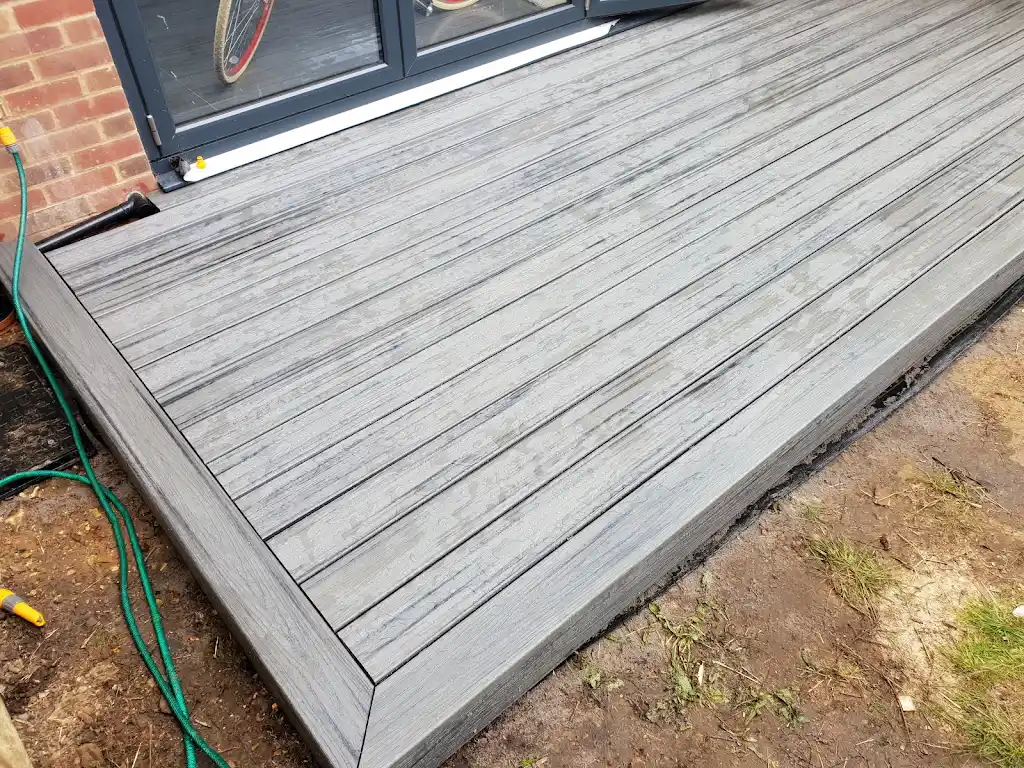
Composite decking costs more initially and then costs you almost nothing: no staining, no sanding, stable colour, and better grip than wet, algae-covered timber. It needs closer joist centres and correct expansion gaps at the ends, which is why a composite deck should be framed for composite from the start rather than boarded over a timber-spec frame.
Bearers and joists are pressure-treated and set at centres appropriate to the board. The frame is supported clear of the ground, on a prepared bearing surface rather than in contact with soil, with airflow beneath so timber can dry.
Where the deck meets the house we keep a ventilation and drainage gap and set the deck height with the damp-proof course in mind. Around drains, inspection covers, downpipes and mature roots we set out the frame so those stay accessible rather than being decked over permanently.
Raised decks need safe access and edge protection: steps set to an even rise, treads deep enough to be comfortable, and balustrade where the drop warrants it. Fascia boards close off the frame, keep the underside out of sight and stop leaves packing in.
We can also build in matched screening or trellis along the boundary side of a deck, so a raised seating area does not overlook a neighbour and does not need a separate contractor.
Domestic decks are typically seating and dining areas off the back of the house, raised platforms in sloping gardens and bases for garden buildings or hot tubs, for hot tubs, the frame is specified for the loaded weight, not the empty shell. Commercial and landlord work leans towards composite for its lifespan, grip and lack of ongoing maintenance.
We build decking across Bracknell, Wokingham, Camberley, Ascot, Reading, Bagshot, Addlestone, Chertsey and Windlesham.
Bracknell · Wokingham · Camberley · Ascot · Reading · Bagshot · Addlestone · Chertsey · Windlesham
Based in Bracknell, working across Berkshire and Surrey every day. See the full areas we cover or contact us to check your postcode.
Before you enquire
Still not sure? Call 07939 405646 and speak to Robert directly, no call centre, no sales script.
Next step
Free site visit, timber and composite priced side by side within 48 hours, up to 5 years' guarantee.
Prefer to talk it through? 07939 405646