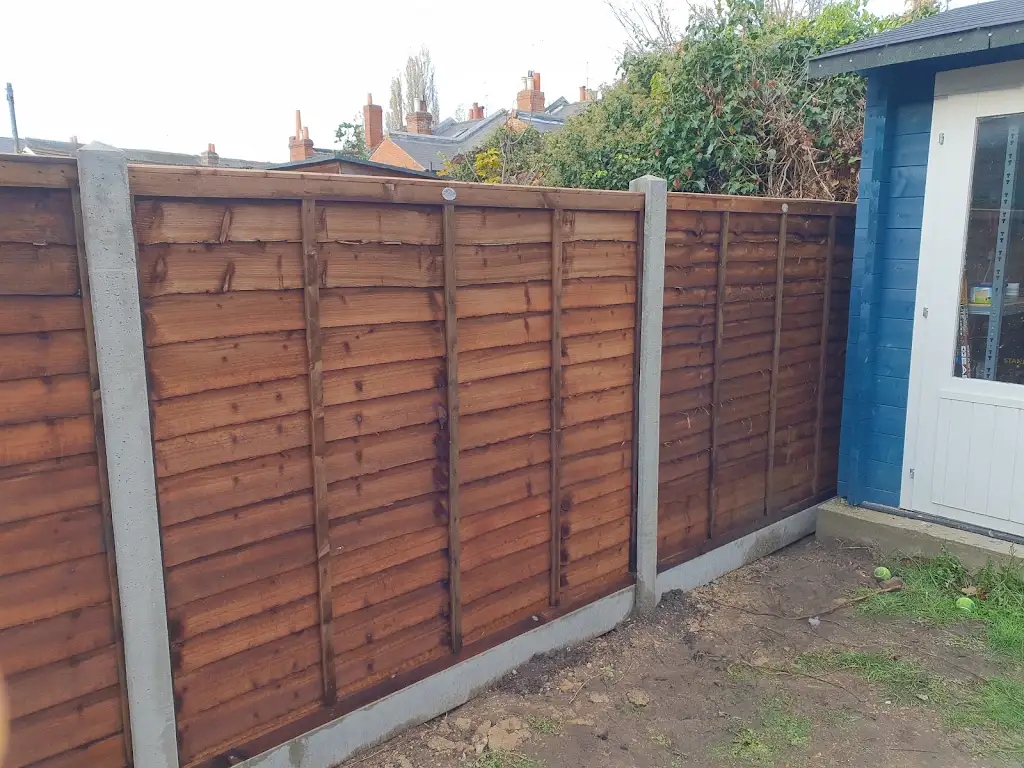
New panels, old posts
A panel is only fixed at its edges. Fitted into posts that are already soft, the panels will be loose again within a couple of winters and the run has to come out entirely.
Every service
Free site visit, written quote within 48 hours and up to 5 years' guarantee on new installations.
All fencing servicesBerkshire &: Surrey
Based in Bracknell, working across Berkshire and Surrey every day.
All areas we coverPanel fencing · Bracknell, Berkshire & Surrey
A straight, even panel run that matches the rest of your boundary and your neighbour's line, fitted on sound posts with gravel boards, priced in writing within 48 hours and usually finished in one to two days.
20+ years' experience · Up to 5 years' guarantee · Payment on completion
Fencing experience
Public liability insured
Guarantee on new installs
Quote after your site visit
Checkatrade member
Service overview
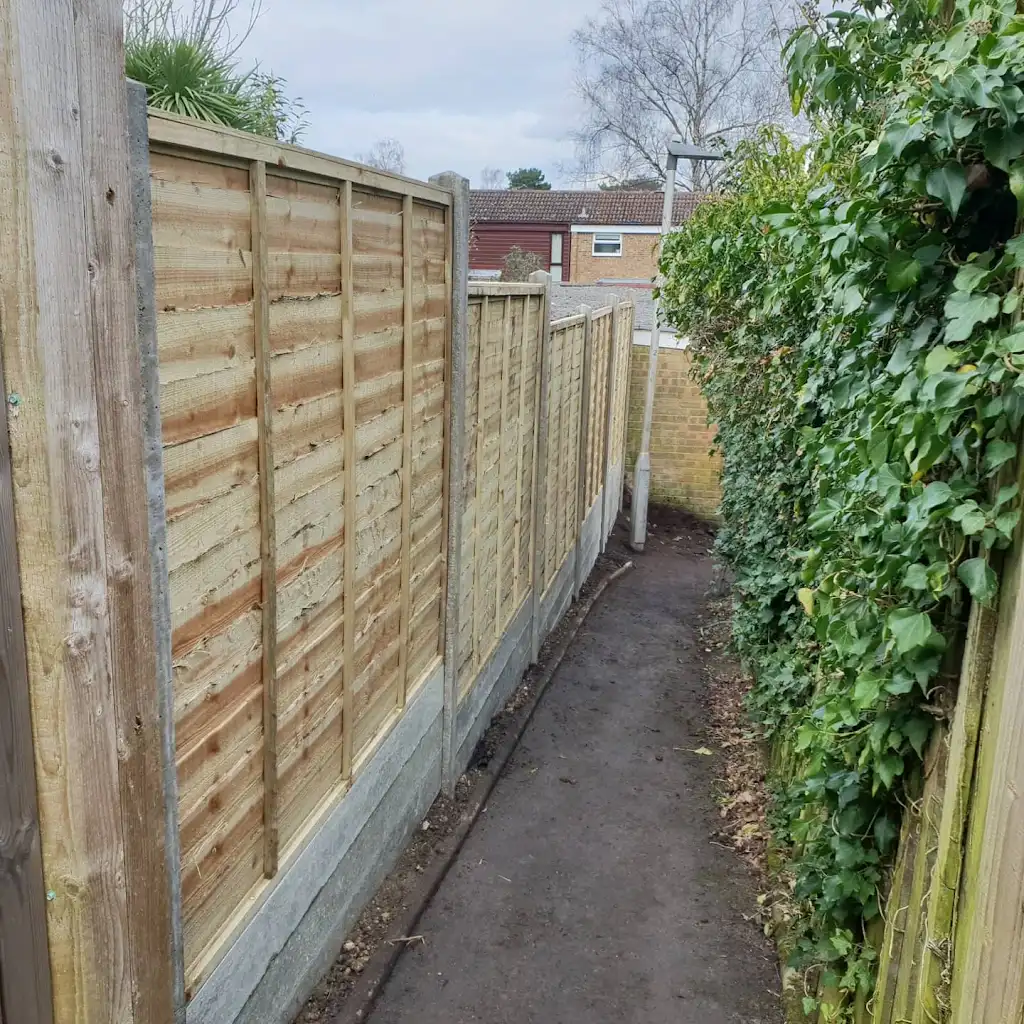
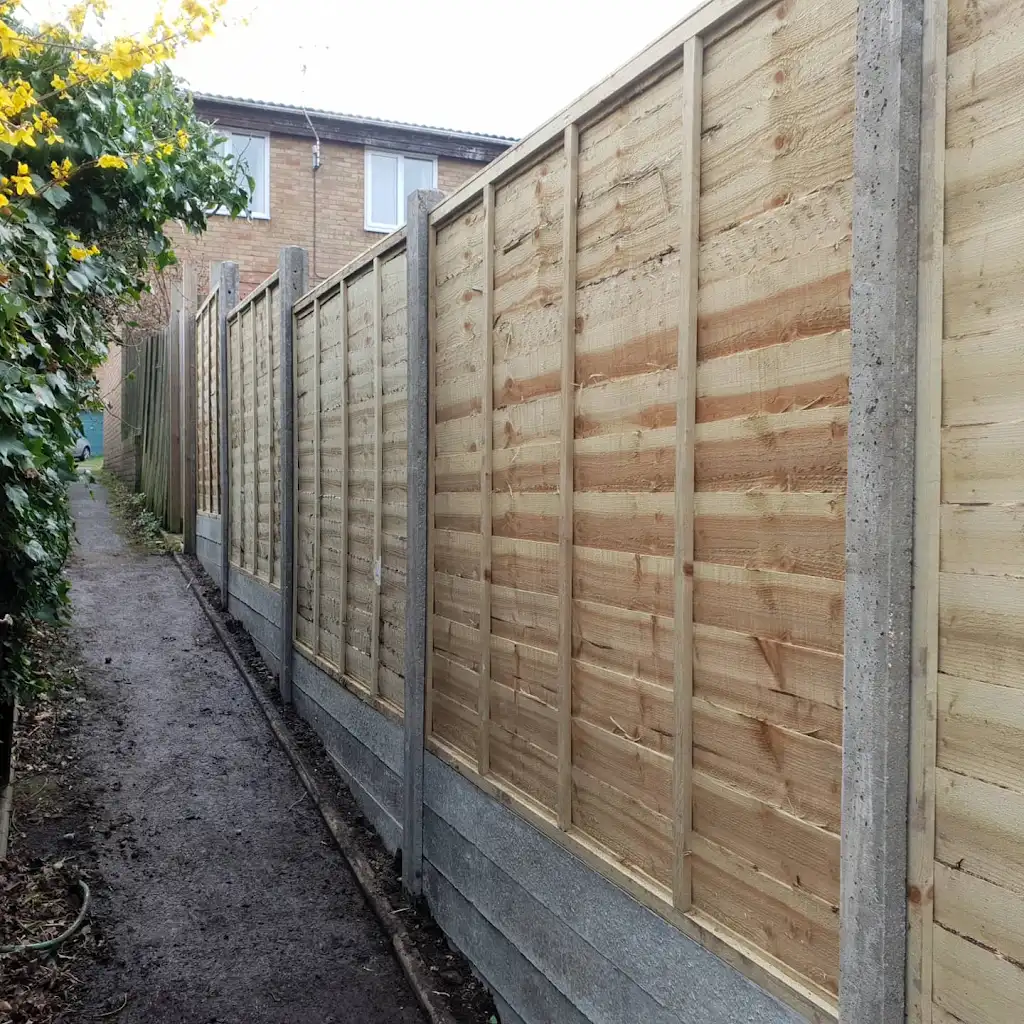
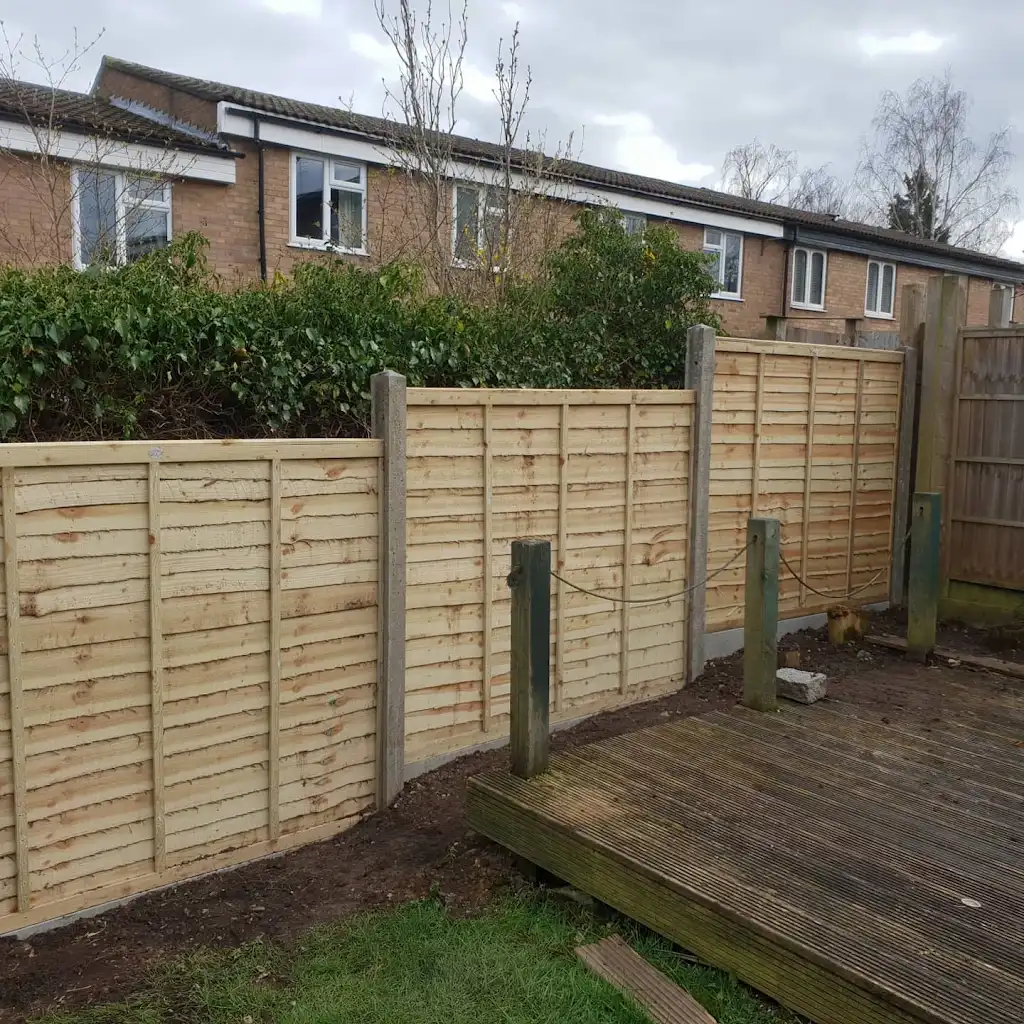
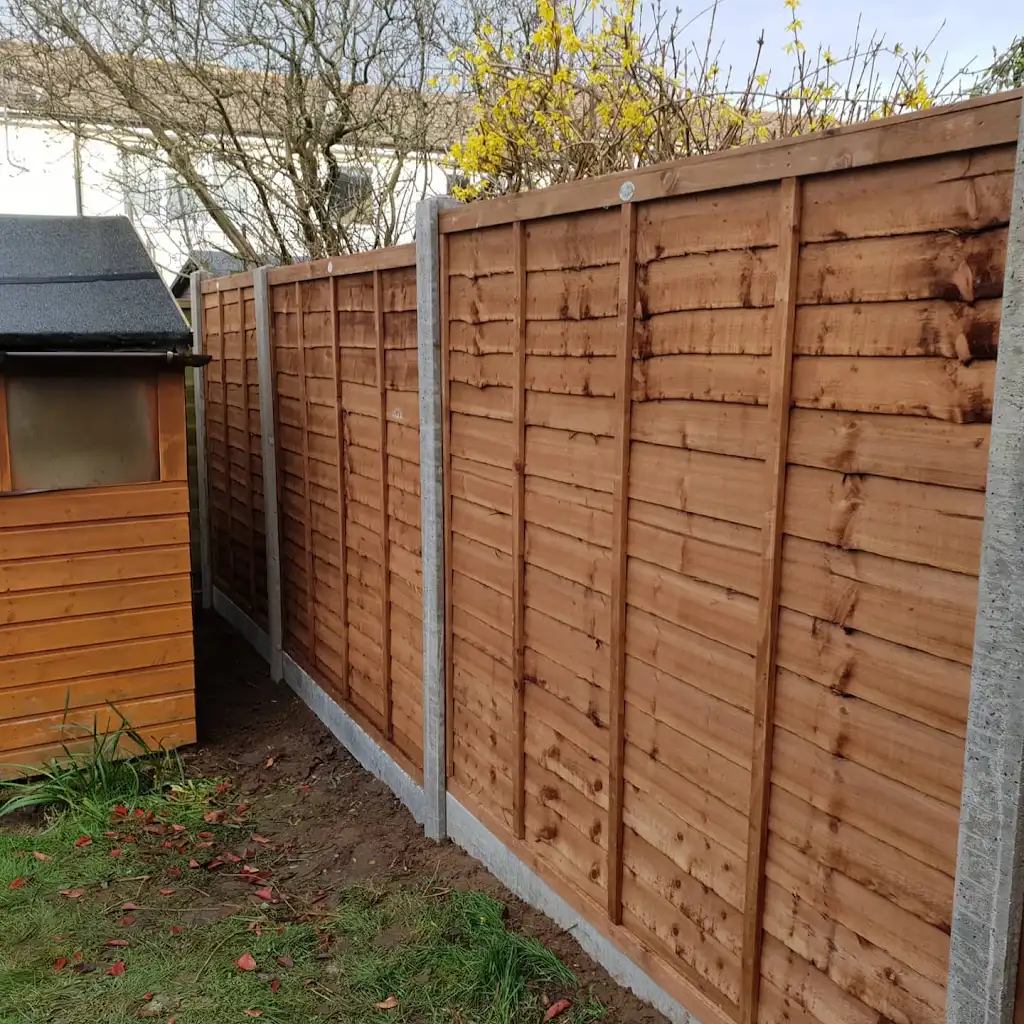
Panel fencing is fence built from pre-made panels, lap, feather-edge, closeboard-style, decorative or slatted, dropped into concrete post slots or fixed between timber posts, sitting on a gravel board. It is the quickest way to replace a boundary and the most cost-effective way to install a straight run.
The install is a setting-out job. Panels are a fixed width, so post centres have to be exact along the whole run, and any accumulated error shows up as a narrow made-up bay at the end. We set out the full line first, decide where any short bay lands, and work from a string line so the top of the fence reads as one level or cleanly stepped line.
Panels are only as good as what holds them. Fitting new panels into old posts, or onto ground where the gravel board has gone, means the new fence inherits the old fence's failure date. Levels also matter more with panels than with built-on-site closeboard, because a rigid rectangle cannot follow the ground; it has to be stepped deliberately.
Over 20 years of local installs means we know what the estates around Bracknell were originally built with, and can match heights and profiles rather than guessing.
What it costs to wait
Panel fencing is where most corner-cutting happens, because it looks finished from the house whatever is going on at the base.
A panel is only fixed at its edges. Fitted into posts that are already soft, the panels will be loose again within a couple of winters and the run has to come out entirely.
Panels sitting on soil wick water straight up into the bottom rail. The panel rots from the base while the top three-quarters is still sound.
Panels are solid sails. Underset posts and loose fixings turn a gale into a domino run across the whole boundary.
A run patched with whatever was in stock never looks right again and drags the appearance of the whole garden down.
Our process
Robert comes out at a time that suits you, walks the boundary, checks access for materials and spoil, and looks at ground conditions, clay, made-up ground, tree roots, services and levels all change what the job needs. Nothing is priced over the phone from guesswork.
You get a tailored written price, normally inside 48 hours of the visit and often sooner. It states the materials, the heights, the number of posts and boards, the expected duration and what is taken away. Payment is due on the day of completion.
Old materials are stripped out and removed, post positions are set off a string line, and holes are dug to depth rather than to whatever the ground allows. Getting this stage right is the difference between a fence that stays plumb and one that leans in two winters.
Posts are set and allowed to hold, gravel boards keep timber off the wet ground, and each bay is levelled and fixed as we go rather than corrected at the end. A standard domestic job is completed in one to two days.
We walk the finished line with you, check every fixing, gate swing and level, sweep the site and take the waste with us. Payment is due on the day of completion by card, bank transfer or cash; repairs carry a 1 year guarantee, new installations up to 5 years.
What you get
A standard panel run is a one to two day job, so the garden is open again fast and access through the property is brief.
Panels are the most economical way to reinstate a straight run, and we will tell you when a heavier build is worth the difference.
Set out off a string line with post centres matched to panel width, and any short bay placed where it is least visible.
Panels lifted clear of soil and standing water, so the base is not the first thing to fail.
Heights and profiles matched to the panels that stay and to the neighbouring line, so the run reads as one fence.
Up to 5 years' guarantee on new installations, 1 year on repairs, with £5m public liability and employers' liability cover.
Detail that matters
Panel choice should follow exposure and purpose, not just price.
Concrete slotted posts take panels quickly, will not rot at ground level and are the most durable option on an exposed boundary. They are heavier work to set and less attractive close up.
Timber posts look better, allow panels to be face-fixed at any height and make future alterations; a gate, a trellis top, a stepped section, far easier. They will eventually fail at ground level, which is why depth, concrete detail and gravel boards matter so much. We will recommend one on the site visit and explain the cost and lifespan difference either way.
We set out the whole run before digging, so post centres suit the panel width and any made-up bay lands somewhere sensible. On sloping ground, panels are stepped; each bay level, dropping at the posts, and we will show you exactly where those steps fall before we start.
Boundary lines and the neighbour's side are part of the conversation, not an afterthought. Which face the panels sit on, whether the good side faces in or out, and how your line meets an already-replaced neighbouring run are all agreed on the site visit.
Not every panel run needs a full replacement. Where the posts are sound and only some panels have failed, replacing panels is a repair, starting from £150 + VAT with a 1 year guarantee, and we will match profile and height as closely as the existing fence allows.
We install and replace panel fencing across Bracknell, Wokingham, Camberley, Ascot, Reading, Bagshot, Addlestone, Chertsey and Windlesham.
Bracknell · Wokingham · Camberley · Ascot · Reading · Bagshot · Addlestone · Chertsey · Windlesham
Based in Bracknell, working across Berkshire and Surrey every day. See the full areas we cover or contact us to check your postcode.
Before you enquire
Still not sure? Call 07939 405646 and speak to Robert directly, no call centre, no sales script.
Next step
Free site visit, written quote within 48 hours, and a standard run installed in one to two days.
Prefer to talk it through? 07939 405646