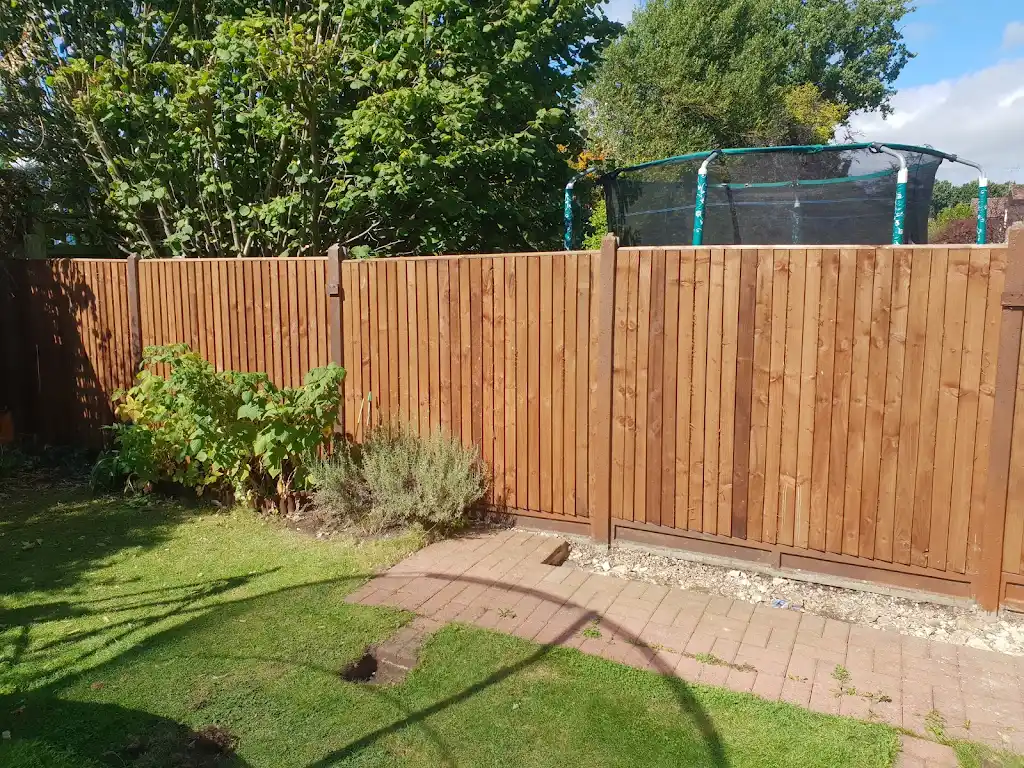
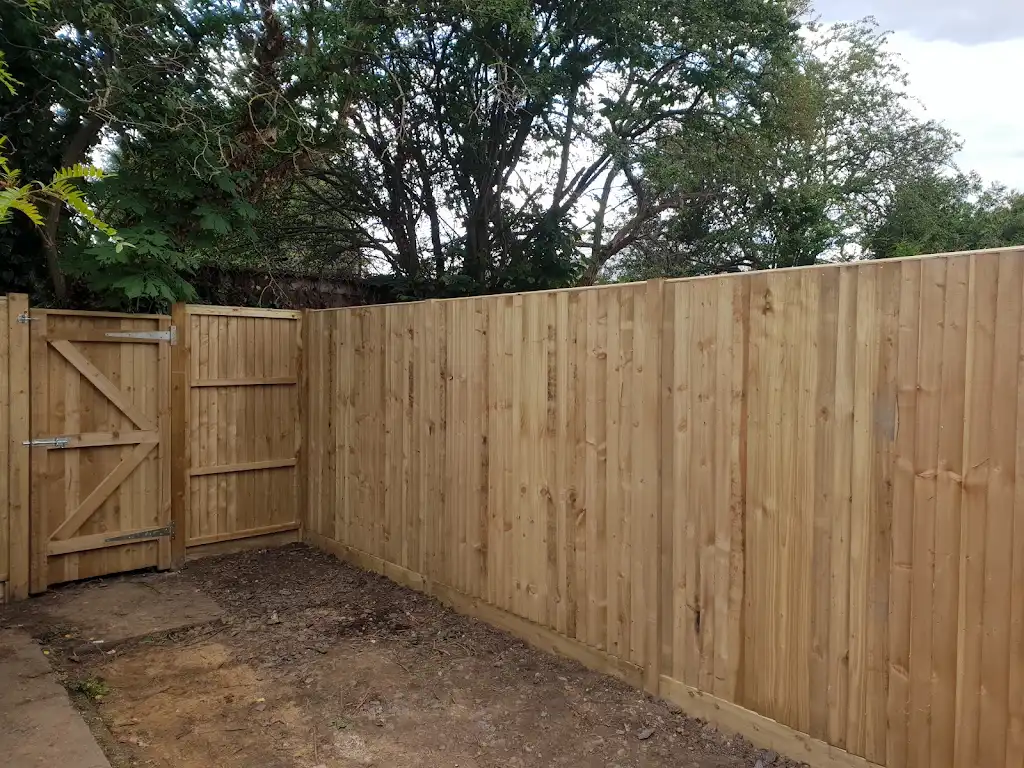
One rotten post becomes a whole run
When a post goes, the bays either side lose their fixing point and start to twist. A single post replacement is a small job; a collapsed 15-metre run is a full installation.
Every service
Free site visit, written quote within 48 hours and up to 5 years' guarantee on new installations.
All fencing servicesBerkshire &: Surrey
Based in Bracknell, working across Berkshire and Surrey every day.
All areas we coverTimber fencing · Bracknell, Berkshire & Surrey
A closeboard or feather-edge boundary that holds a straight line, keeps dogs and children in, and does not need touching again for years, measured in person, priced in writing within 48 hours and usually finished in one to two days.
20+ years' experience · Up to 5 years' guarantee · £5m public liability insured
Fencing experience
Public liability insured
Guarantee on new installs
Quote after your site visit
Checkatrade member
Service overview
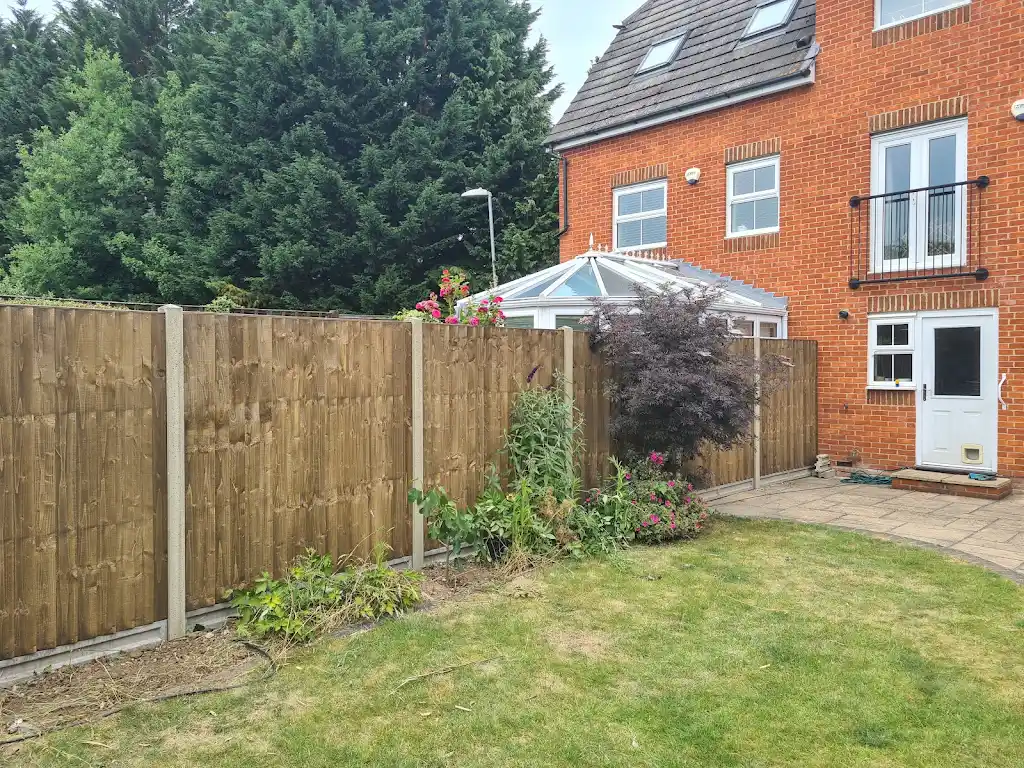
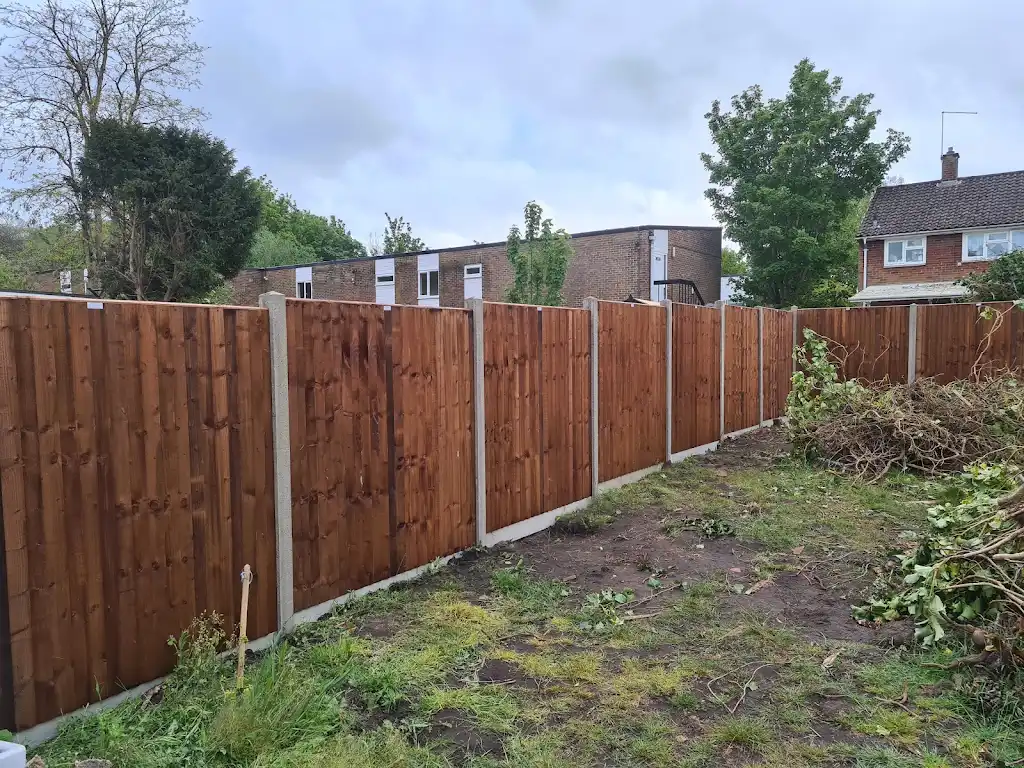
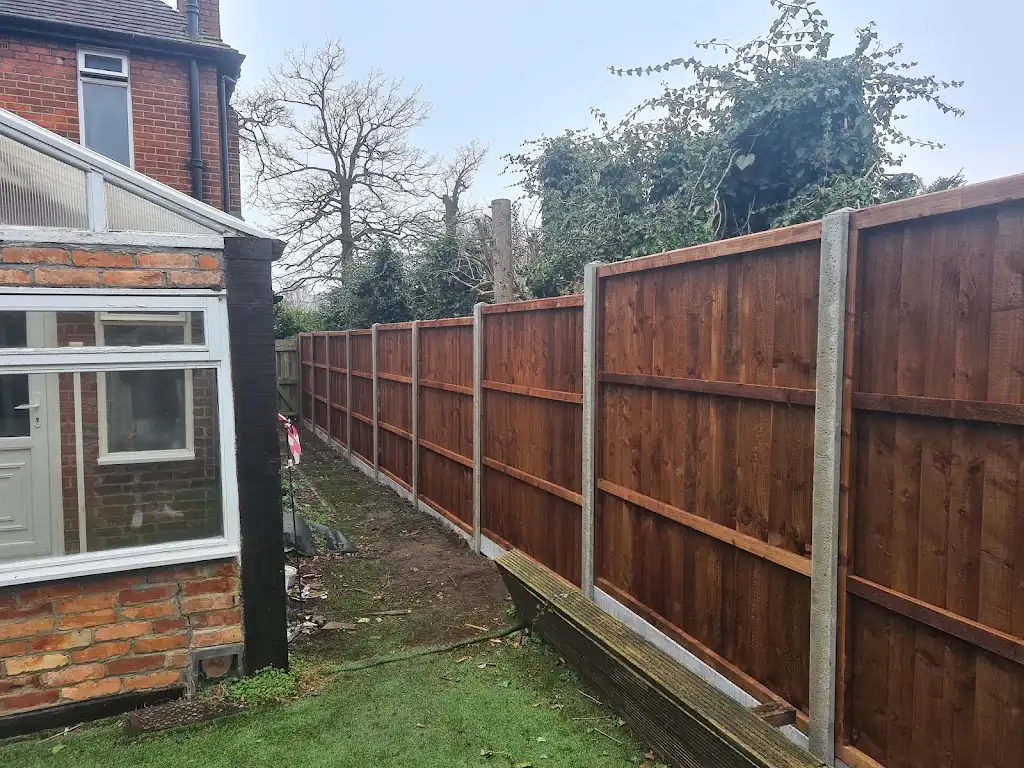
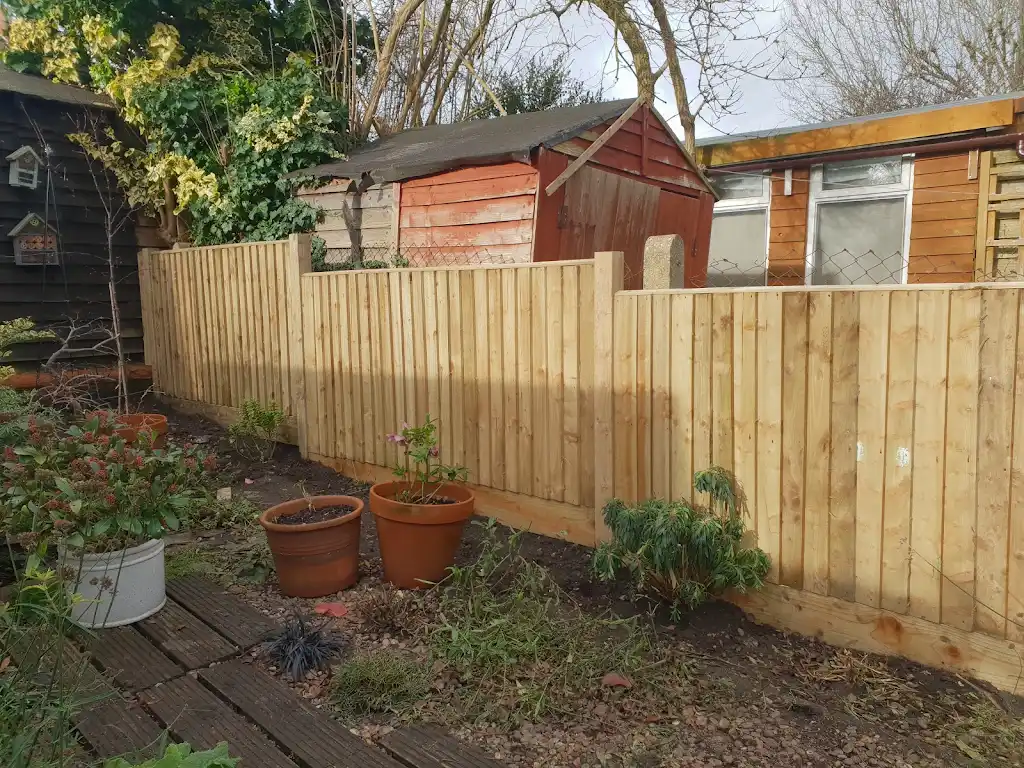
Timber fencing covers closeboard (also called featherboard), feather-edge panels, lap panels, post-and-rail and picket runs. The visible timber is only part of it: what keeps a fence standing is the posts, the depth they are set to, and the gravel board that stops end grain sitting in wet soil. We install the whole system, not just the boards you can see.
Every run starts from a string line and a measured post spacing, so bays stay even and the top line stays level or steps cleanly with a sloping garden. Closeboard is built up on site, which means we can follow awkward ground and odd lengths instead of forcing a standard panel width and leaving a gap at the end.
A fence is a structure, not a decoration. Post depth, concrete mix, drainage at the base and the order the bays go up all decide whether it lasts three years or fifteen. Those are the parts a DIY run or a cheap day-rate job usually gets wrong, and they are the parts that cannot be fixed later without pulling the fence back down.
We are a family firm: Robert and Sean Stephens, with over 20 years of fencing behind us, £5,000,000 public liability insurance and employers' liability cover, and a Checkatrade profile you can read before you commit to anything.
What it costs to wait
Timber fencing rarely fails all at once. It fails at the base, out of sight, and the cost of putting it right climbs every season it is left.
When a post goes, the bays either side lose their fixing point and start to twist. A single post replacement is a small job; a collapsed 15-metre run is a full installation.
Berkshire and Surrey gardens funnel wind between houses. A fence already loose at the base is the one that ends up on a car, a greenhouse or a neighbour's patio, and that becomes an insurance conversation, not a fencing one.
A gap at the bottom of a fence is enough for a dog to get out or for access to the back of the property. Most people notice the day after it matters.
The longer a leaning fence sits off the true line, the more argument there is about where the line was. Replacing it properly, on the correct line, ends that.
Our process
Robert comes out at a time that suits you, walks the boundary, checks access for materials and spoil, and looks at ground conditions, clay, made-up ground, tree roots, services and levels all change what the job needs. Nothing is priced over the phone from guesswork.
You get a tailored written price, normally inside 48 hours of the visit and often sooner. It states the materials, the heights, the number of posts and boards, the expected duration and what is taken away. Payment is due on the day of completion.
Old materials are stripped out and removed, post positions are set off a string line, and holes are dug to depth rather than to whatever the ground allows. Getting this stage right is the difference between a fence that stays plumb and one that leans in two winters.
Posts are set and allowed to hold, gravel boards keep timber off the wet ground, and each bay is levelled and fixed as we go rather than corrected at the end. A standard domestic job is completed in one to two days.
We walk the finished line with you, check every fixing, gate swing and level, sweep the site and take the waste with us. Payment is due on the day of completion by card, bank transfer or cash; repairs carry a 1 year guarantee, new installations up to 5 years.
What you get
A standard domestic timber fence is completed in one to two days, so your garden is open again quickly and access through the house or side gate is short-lived.
Posts set to depth, gravel boards keeping timber off wet ground and even bay spacing off a string line; the reason a fence still reads level years later.
New timber installations carry up to 5 years' guarantee depending on the style installed. Repairs carry 1 year. Both are stated before you agree to the work.
One free site visit, one written quote inside 48 hours, and payment due only on the day of completion once you have seen the finished fence.
£5,000,000 public liability plus employers' liability cover, so machinery, spoil and heavy timber on your property are never your exposure.
The old fence, posts, concrete and offcuts leave with us. You are not left with a pile of rotten timber to book a skip for.
Detail that matters
Different boundaries want different builds. On the site visit we will tell you plainly which of these suits your garden, your exposure to wind and your budget.
Timber runs can be built on concrete posts with slotted bays, or on timber posts with rails fixed through; each has a place. Concrete posts are the harder-wearing option on exposed boundaries and remove the most common failure point altogether, at the cost of appearance. Timber posts look better and take fixings anywhere along their length, which matters for closeboard, trellis tops and gates.
Gravel boards go in as standard rather than as an upsell. They lift the fence boards clear of soil, mulch and standing water, and when a gravel board eventually gives up it can be swapped in an hour without touching the fence above it. Pressure-treated timber, galvanised fixings and correctly capped posts are the rest of the picture.
Local gardens throw up the same problems repeatedly: heavy clay that holds water against post bases, made-up ground behind newer estates, mature conifer and leylandii roots along old boundaries, and long runs that fall a metre or more across the garden. Each changes the job, root-heavy lines may need post positions adjusted, sloping ground needs the fence stepped or raked deliberately, and clay needs the base detailed so water is not trapped.
This is exactly why we do not price fencing from a sheet over the phone. Two 20-metre fences in the same postcode can be genuinely different jobs.
Domestic work is usually 1.8m closeboard or panel boundaries, side gates and front garden picket, completed in one to two days with the garden handed back clean. Agricultural work runs to longer post-and-rail and stock boundaries where line, spacing and durability matter more than finish detail. Commercial and landlord work is judged on how little it needs revisiting; we will specify the harder-wearing build rather than the cheapest one and tell you the cost difference honestly.
We work for homeowners, landlords, agricultural and commercial clients across Bracknell, Wokingham, Camberley, Ascot, Reading, Bagshot, Addlestone, Chertsey and Windlesham.
Bracknell · Wokingham · Camberley · Ascot · Reading · Bagshot · Addlestone · Chertsey · Windlesham
Based in Bracknell, working across Berkshire and Surrey every day. See the full areas we cover or contact us to check your postcode.
Before you enquire
Still not sure? Call 07939 405646 and speak to Robert directly, no call centre, no sales script.
Next step
Free site visit, a written quote within 48 hours, and a standard fence installed in one to two days.
Prefer to talk it through? 07939 405646